
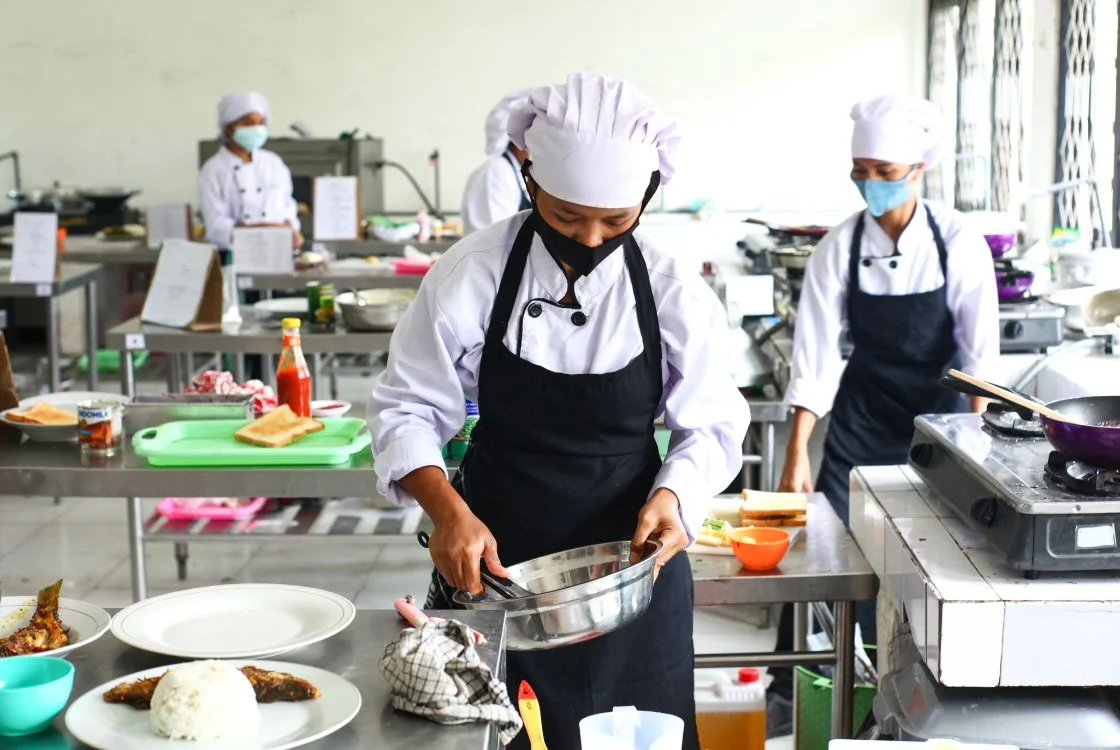
Most guides on packaged food and beverage halal certification in Indonesia focus on products moving through a factory and a supply chain. Restaurants, cafes, cloud kitchens, and hotel food outlets — collectively the HORECA (Hotel, Restaurant, Catering) segment — face a different set of requirements because the “product” is prepared and served on-site, often with menu changes, multiple suppliers, and shared kitchen equipment. For foreign F&B brands entering Indonesia through a franchise, a directly owned outlet, or a hotel food and beverage operation, understanding the HORECA-specific path matters as much as understanding the certificate itself.
Why HORECA certification is assessed differently
A packaged product is certified once, against a fixed formulation, and then monitored for consistency. A restaurant menu changes seasonally, sources ingredients from multiple and sometimes rotating suppliers, and prepares food in a kitchen that may also handle non-halal items if the outlet is not fully halal. BPJPH and the auditing LPH assess HORECA outlets on:
- Menu-wide ingredient mapping — every dish and its ingredients, not just a single hero product.
- Supplier verification for each ingredient category — meat, poultry, seafood, sauces, marinades, and any pre-made components sourced from third parties.
- Kitchen segregation — whether the outlet operates as fully halal, or maintains separate halal and non-halal preparation zones, equipment, and storage.
- Staff practices — training for kitchen and service staff on cross-contamination risks, particularly around shared fryers, grills, and cutting boards.
- Alcohol and non-halal item policy — for hotel outlets or venues that also serve alcohol elsewhere on the premises, clear separation between the halal-certified outlet and other outlets is required.
Fully halal outlet vs. mixed-menu outlet
Foreign F&B operators have two practical models in Indonesia. A fully halal outlet commits the entire kitchen, menu, and supply chain to halal standards — this is the more common and more straightforward path to certification, and the one most quick-service and casual dining foreign brands choose. A mixed-menu outlet, where halal and non-halal items are prepared in the same space, requires strict physical and procedural segregation that is harder to certify and maintain, and is generally only pursued by larger hotel operations with dedicated kitchen zones and trained staff for each.
For most foreign brands entering the Indonesian market for the first time, committing to a fully halal menu from day one is both the simpler compliance path and the stronger commercial signal to the largely Muslim consumer base.
What documentation a HORECA outlet needs to prepare
Beyond the standard company and product documentation required for any halal application, HORECA operators should prepare:
- A complete recipe book with every ingredient and supplier listed per dish.
- Supplier halal certificates or declarations for each ingredient category, updated whenever a supplier changes.
- A kitchen layout plan showing preparation zones, storage, and equipment.
- Standard operating procedures for staff on cross-contamination prevention.
- A designated halal compliance officer at the outlet level, not just at the corporate level, particularly for multi-outlet franchise operations.
Multi-outlet and franchise considerations
For a foreign brand opening multiple outlets or operating through a franchise structure, each physical outlet is generally assessed individually, even where the menu and supply chain are standardized. A franchise agreement should specify which party — franchisor or franchisee — is responsible for maintaining the Halal Assurance System at each location, since BPJPH holds the certificate holder, not the brand name, accountable for compliance.
Timeline and cost expectations for HORECA halal certification
HORECA certification timelines are typically comparable to packaged-product certification — often eight to twelve weeks from a complete application to certificate issuance — but the preparation phase tends to run longer because menu and supplier documentation for a full restaurant menu takes more time to compile than for a single packaged product line. Costs scale with the number of menu items and outlets rather than production volume, so a foreign brand planning multiple locations should budget certification as a per-outlet cost rather than a one-time company-wide expense.
How Watershore helps F&B operators
Our halal certification service supports foreign restaurant, cafe, and hotel F&B operators through menu ingredient mapping, supplier documentation collection, kitchen compliance review, and coordination with BPJPH and the appropriate LPH — structured for either a single flagship outlet or a multi-location rollout.
References
- BPJPH — Badan Penyelenggara Jaminan Produk Halal: https://bpjph.halal.go.id
- Law No. 33 of 2014 on Halal Product Assurance
- Government Regulation No. 39 of 2021 on Implementation of the Halal Product Assurance Sector